
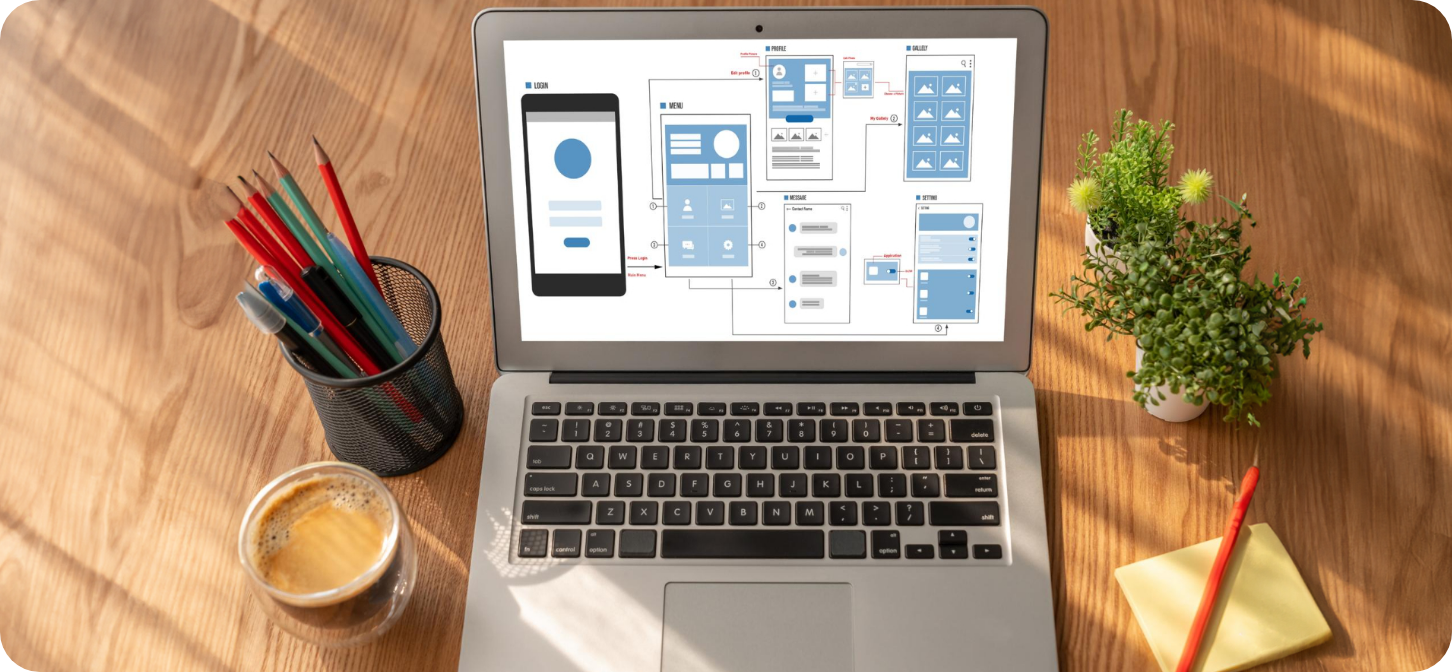
MVP Development Checklist to Know Before Writing Code
Building a startup is exciting, but it also comes with significant risks. Success is not just about moving fast; it is about making the right decisions from the outset, particularly in today’s competitive market. One of the most expensive mistakes startups make is building products based on unvalidated assumptions. Product-market fit is not assumed; it is earned.
That’s where Minimum Viable Product (MVP) development becomes important for businesses, as it provides a structured way to test ideas, learn from real users, and iterate before committing to a full-scale build. Before your developers write a single line of code, there are strategic decisions that must be clearly defined. This checklist will help you move faster, spend smarter, and launch with confidence.
The Pre-Code MVP Checklist for Startups
Getting an MVP right is not just a development task; it is a business strategy. Successful startups treat their MVP as a learning tool, not just a product launch. This checklist is divided into four critical stages.
1. Validate the Problem Before Writing Any Code
The biggest reason startups fail is simple: they build solutions for problems that don’t truly exist or aren’t important enough. Before starting development, you must validate that your problem is worth solving.
Key Questions to Answer:
- Have you conducted 15–20 discovery interviews with potential users?
- Can you explain the problem clearly in one sentence (without mentioning your product)?
- Is the problem frequent enough (daily/weekly) to require a solution?
- Are decision-makers actively looking for a solution right now?
If the answer is “no” to any of these, your MVP investment is at risk.
It is advisable to pause, validate thoroughly, and only then proceed with development.
2. Define Your MVP Feature Set With Precision
This is where most startups go wrong: they try to build too much, too early. An MVP is not your full product. It is the smallest version that delivers real value and generates learning.
Focus Only on Must-Have Features
Must-have features are those without which your core value does not exist. A simple test:
If this feature is removed, does your product still solve the problem?
If it’s yes, please remove it
If it’s no, please keep it
Most MVPs should have only 3–5 core features.
Remove All Non-Essential Features
Avoid adding advanced analytics dashboards, complex integrations, multi-language support, and heavy admin controls. These increase the cost and delay launch without adding early value.
Map the User Journey Before Development
Before coding begins, the following must be clearly defined to ensure your team builds the right flow from day one:
- How users sign up
- How they use the product
- When they experience value
Define Clear Success Metrics
An MVP without metrics is a blind experiment. Set 3–5 measurable KPIs such as:
- Activation rate
- Feature adoption
- User retention (30/60/90 days)
- Session frequency
- Willingness to pay
These metrics determine whether to pivot, improve, or scale.
3. Know Your Target Audience Clearly
For startups, you are not selling to one person; you are selling to a group of decision-makers. That is where your MVP should address multiple stakeholders.
The 3 Key Profiles You Must Define
- The End User: The person using your product daily. Focus on their workflow challenges and friction points.
- The Economic Buyer: The decision-maker approving the budget. They care about ROI, efficiency, and risk reduction.
- The Internal Champion: The person advocating for your product internally. They influence adoption and deal success.
Every feature in your MVP should serve at least one of these stakeholders.
4. Confirm Tech Stack, Timeline & Budget
Once your idea and features are validated, it’s time to make technical decisions. Choosing the wrong technology early can lead to expensive rebuilds later.
Key Decisions Before Development
Choose a Scalable Tech Stack. Use proven technologies like:
- React
- Node.js
- Python
- Ruby on Rails
Avoid experimental frameworks at the MVP stage.
Set a Realistic Budget
Define a fixed MVP budget with a 15–20% buffer to handle unexpected scope changes.
Define a Clear Timeline
Most MVPs should be completed within 8–16 weeks. If it takes longer, your scope is too large.
Choose the Right Development Approach
These include options such as an in-house team, freelancers, and a dedicated MVP development company. For non-technical founders, working with a dedicated team ensures faster and more reliable execution.
Plan for Post-Launch Iteration
Your MVP launch is just the beginning. Post-launch, plan to collect user feedback, refine features, and allocate at least 30% of the budget for iterative updates.
Common Mistakes That Startups Make in MVP Development
- Skipping Validation: Building a product without validating real user demand increases the risk of failure. It may result in creating something that users do not actually need or use.
- Overbuilding the Product: Adding too many features early increases complexity and slows down development. This delays launch and raises the chances of errors and inefficiencies.
- Ignoring Metrics: Without tracking data and performance metrics, decisions are based on assumptions. This makes it difficult to optimize the product or identify areas for improvement.
- Poor Technical Decisions: Choosing the wrong technologies can limit scalability and performance. It often leads to expensive rework and delays in the long run.
Cost Approach of MVP Development for Startups
The cost of MVP development typically ranges from $10,000 to $120,000+, depending on how advanced and market-ready the product needs to be. Instead of a one-size-fits-all estimate, MVP investments can be better understood across three levels of maturity:
Starting-Level MVP ($10,000 – $30,000)
At this stage, the focus is on building a lean, functional product that validates the core idea with minimal investment. It includes only essential features, basic UI/UX, and limited integrations.
Mid-Level MVP ($30,000 – $70,000)
This level introduces a more refined user experience, better architecture, and selective integrations. The product is built not just for validation but for early traction. It may include improved UI/UX design, scalable backend structure, and integration with key third-party tools.
Advanced MVP ($70,000 – $120,000+)
An advanced MVP is designed to be scalable, secure, and closer to a full-fledged product. It includes robust architecture, high-quality UI/UX, multiple integrations, and enhanced security layers, especially for data-sensitive applications.
How Markup Designs Supports MVP Development
A strong pre-development process can save months and significantly reduce costs. Markup Designs focuses on turning ideas into clear, visual, and actionable product blueprints before development begins.
Instead of discovering issues during development:
- User experience gaps are identified early
- Features are clearly defined
- Development becomes faster and more accurate
This approach helps:
- Reduce rework
- Improve product quality
- Accelerate time-to-market
MVP: A Strategic Way to Build Smarter Startups
Building an MVP without a structured checklist is like starting a journey without a roadmap; it increases cost, delays progress, and raises the risk of failure.
In today’s environment, startups face unique pressures like:
- Customers are more demanding
- Sales cycles become longer
- Execution must be precise
A structured MVP approach ensures:
- Better decision-making
- Efficient use of resources
- Faster validation
Conclusion
MVP development is not just about building fast; it is about building correctly. Startups that succeed are not the ones that move the fastest, but the ones that move with clarity and strategy. If you validate your idea, focus on core features, and follow a structured approach, your MVP becomes a powerful foundation for long-term growth. It also enables smarter decision-making by turning assumptions into real user insights early in the journey. A well-planned MVP minimizes wasted resources and ensures every investment is aligned with measurable outcomes.
Author’s Perspective
If there’s one thing we’ve consistently observed, it’s this: AR/VR is no longer about “if” businesses should adopt it, it’s about how strategically they do it. The companies that are winning are not the ones experimenting randomly. They are the ones aligning immersive technology with clear business goals.
Because when done right, AR/VR doesn’t just enhance experiences, it reshapes how businesses operate, compete, and grow.
Are you ready to turn immersive technology into a real business advantage? Let’s build something that goes beyond innovation and delivers measurable impact. Connect with us to start your AR/VR journey.

Insights Are Valuable & Execution is Priceless
You’ve read about the digital future. Now, let’s build the infrastructure to take you there. Move your strategy from the page to the product.
Design Your Solution Now
Schedule The Appointment At Your Convenience Date And Time.
30 Min
Web Conference
Time Zone
Indian standard time (08:30pm)

Thanks For Getting In Touch!
You’ve Taken The First Step Toward Transforming Your Digital Presence. Our Experts Will Reach Out Shortly To Take It Forward.