
Android vs iOS: The Ultimate App Development Showdown
Imagine you’re building an app in 2026. One decision will define your success before a single line of code is written, Android and iOS? No third wheel necessary here. With over 5 billion smartphones buzzing around the world, Android is the clear winner, while iOS is all about premium. The global dominance of Android vs iOS market share 2026 continues to shape app development decisions worldwide.
Of course, deciding between these two juggernauts is part of the iOS vs Android development comparison that shapes modern mobile strategy. And let’s face it – it impacts how users will use your app, how developers will make it, and how you will actually reach users.
In this blog, we are here to simplify everything for you. We will discuss all the benefits, drawbacks, and latest developments, and determine which one really needs your time, money, and brainpower. Many businesses still struggle to decide which platform is better for app development.
Key Market Statistics for Web Development That You Can’t Ignore in 2026
The global mobile ecosystem continues to grow rapidly, influencing the Android vs iOS development landscape. As of 2026, Android holds approximately 71.3% global market share, while iOS maintains around 28.2%. There are over 3.9 million apps on the Google Play Store and nearly 1.9 million apps on the Apple App Store, showing the massive competition in both ecosystems.
Mobile users spend an average of 4.8 hours per day on smartphones, highlighting the importance of app engagement. iOS users generate nearly 65% higher in-app revenue per user compared to Android users. Additionally, cross-platform development frameworks now power about 42% of new mobile apps globally, reflecting the growing demand for efficiency and faster deployment.
The global mobile app market is expected to exceed $781 billion by 2026, making platform choice more critical than ever for businesses and developers.
What is Android vs iOS app development?
Android vs iOS app development refers to the process of building mobile applications for two different operating systems. Android uses Java/Kotlin and is open-source, while iOS uses Swift/Objective-C and runs only on Apple devices with a closed ecosystem.
What is iOS App Development?
iOS app development is the process of making applications for Apple devices like iPhone, iPad, and iPod touch. This is done by developing software using programming languages like Swift or Objective-C, which is then uploaded to the App Store for users to download. These applications are popular for their user interface and their integration with other Apple products.
Developing an iOS application is complex for various reasons. These include the need for the application to comply with App Store requirements as well as the need for testing the application on different types of devices. This can be achieved by outsourcing the task to one of the best iOS App Development Companies, which will ensure the application is developed according to Apple’s requirements.
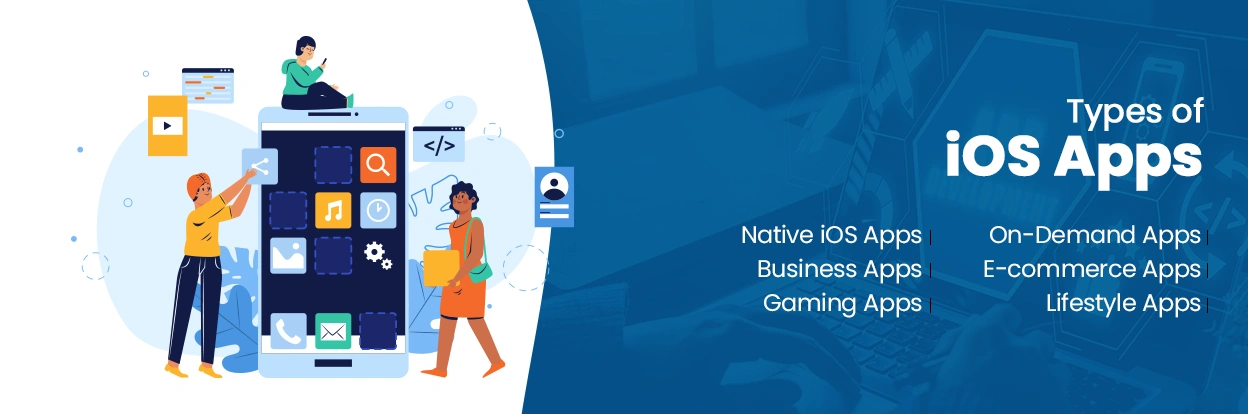
Types of iOS Apps
- Native iOS Apps: These are the applications developed specifically for iOS devices to provide the best possible experience using Swift or Objective-C programming languages.
- Business Apps: These are developed specifically for businesses to effectively manage businesses, employees, and workflows.
- Gaming Apps: These are high-performance gaming applications developed using frameworks such as Metal for graphics and ARKit for augmented reality.
- On-Demand Apps: These applications include food delivery, ride-hailing, and booking applications with real-time capabilities.
- E-commerce Apps: These are the applications developed specifically for the purpose of providing the best possible user experience while shopping online.
- Lifestyle Apps: These applications include fitness, health, and travel applications with user-friendly features.
App Platform and Technology Stack
iOS development is based on a highly organized and controlled ecosystem provided by Apple. The primary languages used for development are Swift (modern and recommended) or Objective-C (legacy). Xcode is used as the primary development tool for creating apps on Apple’s official integrated development environment. The iOS software development Kit offers a
A wide range of frameworks for developing high-performance apps with high visual appeal.
Apple’s strict guidelines are used for achieving consistency, security, and smooth performance on all Apple devices. In addition to these features, cloud integration, AI (Core ML), and hardware-software integration are provided as APIs. Although the ecosystem is limited to Apple devices, a highly controlled ecosystem enables a premium user experience with fewer compatibility issues.
What is Android App Development?
It is the practice of developing applications for Android operating systems. It involves specific processes, languages like Java and Kotlin, and is developed using Android Studio. Android is popular because of the flexibility and customization options available on the platform.
Types of Android Apps
The type of application and purpose can have a significant impact on the costs of developing the application. For example, utility applications have lower costs compared to other applications like games or enterprise applications. Some of the types of applications developed on Android include the following:
- Simple Informational Apps: These types of apps, like news apps, provide information or content and are simple applications. This means the costs of developing these apps are relatively lower, as compared to other complex applications.
- E-Commerce Apps: E-commerce apps involve working with the back-end systems, hence increased costs compared to other applications.
- Social Media Apps: These types of apps require updating data in real time, hence a highly responsive back-end environment. This means the costs of developing social media apps are high compared to other applications.
- Enterprise Apps: These types of apps are developed as tools for enterprises, hence aimed at automating different operations in an enterprise.
- On-Demand Apps: Some of the most popular apps that give users on-demand services or access to resources include features such as geolocation, real-time tracking, the rating system of users, the payment system, and more. These may add to the cost of the application.
App Platform and Technology Stack
Based on the complexity of the application developed for the Android platform, one has to choose between the native and cross-development approach. The cost of the application may be more if the developer goes for the native approach, as compared to the cross-platform approach. The application has more responsiveness and better user interfaces. The application can access all Android devices.
The cost of developing cross-platform applications may be less than developing the application separately for both platforms. However, this approach has limitations in terms of performance or the use of specific native capabilities. The decision depends on your budget and the goals of your business.
Now that we understand both platforms, let’s compare them head-to-head.
Comparison Table: Android vs iOS
| Feature | Android | iOS |
| Programming Languages | Java, Kotlin | Swift, Objective-C |
| Development Tool | Android Studio | Xcode |
| Market Share | ~71% | ~28% |
| App Store Approval | Flexible but slower | Strict but fast and consistent |
| Security Level | Moderate | Very High |
| Customization | High | Limited |
| Development Cost | Higher due to fragmentation | Lower due to limited devices |
| Monetization | Large user base, lower ARPU | Smaller base, higher ARPU |
| Device Variety | Thousands of devices | Limited Apple devices |
| UI Consistency | Varies across devices | Highly consistent |
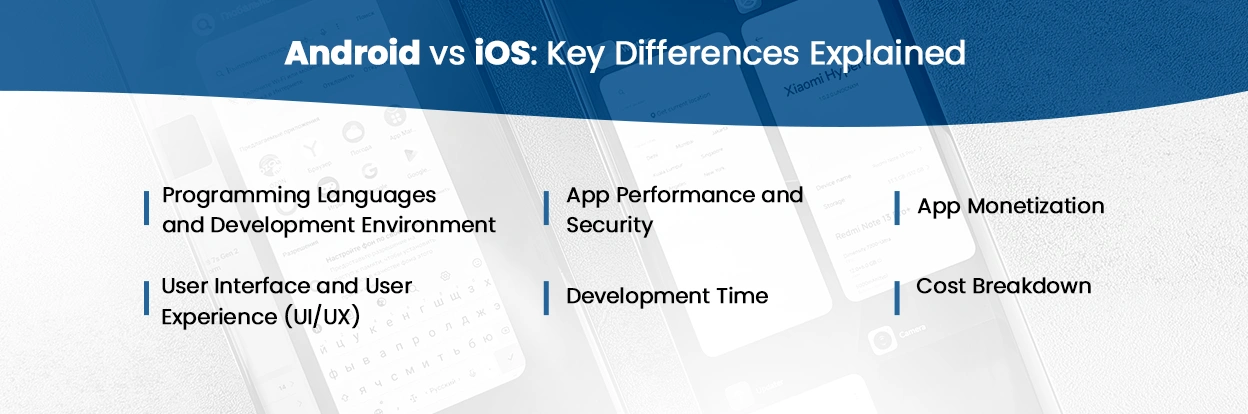
Android vs iOS: Key Differences Explained
This iOS vs Android development comparison becomes clearer when we break down key technical differences.
Which is better: Android or iOS for app development?
There is no single winner. Android is better for reach and a global audience, while iOS is better for revenue and premium users. The best choice depends on business goals, budget, and target audience.
1. Programming Languages and Development Environment
The first difference in the development of Android and iOS apps is with respect to programming languages and development environments.
Android App Development: Android app development is done through Java and Kotlin programming languages. Kotlin has been introduced as an official language for Android app development. Kotlin has become the favorite language for developers because of its simplicity and compatibility with Java. The developers use Android Studio as the official IDE for developing Android apps. Android provides more flexibility in the development process. However, this flexibility makes it easy to create apps with varying quality levels. This might cause fragmentation in the Android world.
iOS App Development: iOS apps are primarily developed using Swift, which has gained popularity due to its performance and simplicity. Swift has been developed by Apple and has provided developers with a more consistent experience. Xcode is the official IDE for developing iOS apps. The developers get a more controlled environment and a fixed set of devices to work with. This helps in avoiding fragmentation-related issues.
In the context of the rate of development, iOS application development is quicker in the development of high-end and secure applications due to the smaller number of devices and screen sizes. However, in the case of Android application development, more time is required for the optimization process due to the numerous devices running the operating system.
2. User Interface and User Experience (UI/UX)
In the context of the discussion on the two ecosystems, the user experience plays a crucial role. When considering the Android and iOS ecosystems, the user experience of the two application development processes differs significantly.
What is the main difference between Android and iOS UI/UX?
Android offers more customization with Material Design, while iOS provides a consistent, minimal, and uniform design across all devices, resulting in a more premium user experience.
Android UI/UX: The Android application development process offers more flexibility in the context of customization. As a result, the user experience in the context of the application’s user interface on Android devices differs. Android application user interfaces vary more than iOS application user interfaces. Android applications utilize Material Design, which emphasizes the use of graphic and bold features. However, the numerous devices running the operating system complicate the user experience and require more time to be devoted to the design process.
iOS UI/UX: iOS has better design consistency for all devices. The design guidelines for iOS are very strict, and this results in high design uniformity. The design of iOS applications is mostly minimalistic. Designing applications for iOS is relatively easy. iOS developers don’t need to worry about various screen resolutions and hardware. iOS is also known for its smooth transitions. This is one factor that adds to its UI/UX experience.
In both cases, iOS has an edge over Android when it comes to design uniformity. However, Android offers more opportunities for creativity with its design approach.
3. App Performance and Security
Security is an essential factor when comparing both platforms. Although both platforms are constantly improving their security features, there are some differences.
Android Security: Android is based on open-source technology. This increases the risks and malware attacks on Android apps. Although Google releases patches and updates for security purposes, these are not equally applied to all apps due to the number of manufacturers. This increases the complexity in Android development compared to iOS development for app security purposes.
iOS Security: Apple is famous for its high-security standards. With iOS development, you have a high-security ecosystem where updates are equally rolled out for all devices. This increases the security of apps developed on the iOS platform. With improved app review policies, you can rest assured that only high-quality apps are developed on the iOS platform. This adds to the importance of Android development vs iOS development.
4. Development Time
Development time is another area where Android development vs iOS development differs. Android supports a wide range of devices, which increases testing effort, while iOS operates on limited device models, making optimization easier.
Android Development: Due to the wide range of devices and varying screen sizes, Android app development often requires more time to ensure compatibility and a consistent user experience across all devices. Additionally, the flexibility of the Android ecosystem demands extensive testing to handle different configurations, operating system versions, and hardware variations. As a result, this increased testing effort can lead to higher development costs.
iOS Development: The app development process for iOS is likely to take a shorter time and be cheaper. This is because there is a smaller number of devices to support, and the uniformity required by Apple makes iOS app development an alternative for businesses seeking to develop apps quickly.
5. App Monetization
The approach to app monetization is an essential factor to consider in these systems. Both platforms provide various ways to monetize an app, but the effectiveness is still different.
Which platform makes more money: Android or iOS?
iOS apps generate higher revenue per user due to strong purchasing behavior, while Android earns through scale because of its larger global user base.
Android App Monetization: The monetization potential per app user is likely to be lower compared to an iOS app. This is because of the reduced tendency for users to make purchases from an Android app. Android dominates in global reach, especially in emerging markets, while iOS leads in premium and high-income regions.
iOS App Monetization: The tendency to spend money on the application by iOS users is high. Therefore, iOS app development has high potential to generate revenue. However, the lower number of users will not be adequately served by the app.
6. Cost Breakdown
The cost of Android vs iOS app development is one of the most important factors in decision-making. The broad device ecosystem of Android increases testing requirements, while iOS’s restricted device models simplify the optimization process.
Is Android or iOS more expensive to develop?
Android development often costs more due to device fragmentation and testing complexity, while iOS development is faster but may require higher upfront compliance and developer program costs.
Android App Cost Breakdown: The cost of creating an Android app is higher than creating an iOS app because the fragmentation of devices in the Android environment makes the development process more complex. When creating an app for the Android environment, the app has to be tested on different devices with varying sizes and resolution capabilities. This makes the development process more time-consuming. Despite the fact that the cost of publishing the application is low, the cost of testing and maintaining the application might be high.
iOS App Cost Breakdown: The cost of creating an iOS application is more cost-efficient in terms of testing and maintaining the application because the number of devices in the iOS environment is low. This makes the process more streamlined and faster. The cost of creating an iOS application might be high because the quality in the iOS environment is high, and one has to pay a fee to get into the program.
Understanding Android vs iOS pros and cons is essential before choosing a platform.
Android vs iOS Pros and Cons
Similar to other platforms, the Android vs iOS pros and cons clearly highlight the strengths and limitations of each system.
The Pros and Cons of Android App Development
Here are the advantages and disadvantages of Android App Development:
Pros:
- More Market Share: Based on Android vs iOS market share 2026, Android still leads globally in user base.
- Customization: Android offers more opportunities for customization, especially in terms of UI/UX and device support.
- Cost-Effectiveness: Android App Development is cost-effective as developers can target a wider range of devices, including budget-friendly ones.
- Open Source: Android is an open-source platform, and hence, developers can enjoy the benefits of customization and use a wide range of tools.
Cons:
- Device Fragmentation: As there are various types of devices running on the Android platform, it becomes essential for the developer to ensure that the application is suitable for various devices.
- Security Risks: As the platform is open source, it is highly prone to security attacks, especially when third-party app stores are used.
- Long Development Time: The development time for the application might be longer for the Android platform, as compared to the iOS platform.
The Pros and Cons of iOS App Development
Here are the advantages and disadvantages of iOS App Development:
Pros:
- Higher Revenue Potential: iOS has a high potential for revenue generation because iOS users are willing to pay more for applications and in-app purchases. So, it’s a great opportunity for businesses to generate more revenue.
- Uniform Device Specifications: Since the iOS operating system is developed by Apple, the developers will never face a fragmentation issue. This means the applications developed will be optimized for a smaller number of devices.
- Security and Stability: iOS benefits from a tightly controlled ecosystem, reducing exposure to malware and ensuring uniform security updates across devices.
- Better User Experience: iOS has a strict policy to provide the best user experience to the end-users. So, the applications developed for the iOS operating system will definitely provide a better user experience.
Cons:
- Less Market Share: Although iOS has a large share in the high-end market, it has less market share compared to Android.
- Higher Cost of Development: Due to Apple’s strict guidelines for app development, iOS development is more expensive.
- Less Customization: iOS is a closed system, and there is less room for customization compared to Android.
Cost Breakdown
Understanding the cost of Android vs iOS app development helps businesses plan budgets more effectively. Below is a comparative overview:
| Cost Factor | Android App Development | iOS App Development |
| Development Cost | Higher due to device fragmentation and testing complexity | Moderate due to limited devices |
| Design Cost | Higher (multiple screen sizes) | Lower (uniform UI guidelines) |
| Testing Cost | High (various devices & OS versions) | Lower (fewer devices) |
| Maintenance Cost | Higher due to frequent updates and device diversity | Moderate and more predictable |
| App Store Fees | One-time $25 (Google Play) | $99/year (Apple Developer Program) |
| Time to Market | Longer due to optimization | Faster due to a controlled ecosystem |
| Overall Cost Range | $25,000 – $120,000+ | $20,000 – $100,000+ |
Note: Costs may vary based on app complexity, features, and development approach (native vs cross-platform).
Real-World Examples: Which Platform Do Businesses Choose?
You can also look at real-world examples to help you decide on the choice between Android and iOS.
Startups = Android First Strategy
Startups follow the Android-first strategy because it allows them to reach a larger audience, especially in new markets. For instance, startups such as Ola and Byju’s chose the Android strategy to grow their businesses.
Premium Brands = iOS First Strategy
Premium brands follow the iOS-first strategy because it allows them to generate more revenue by using in-app purchases. For instance, applications such as Airbnb and Instagram focused more on creating a great iOS application.
Big Companies = Both Platforms
Uber and Amazon are examples of big companies that have invested in both platforms to reach a wider audience.
Which Platform Should You Choose?
Android application development vs. iOS application development depends on your goals and objectives. Some of the key points to be considered in this regard are as follows:
- Audience Reach: If your goal is to reach the maximum audience possible, especially in emerging countries, then the answer would be Android application development vs. iOS application development.
- Revenue Goals: If your goal is to reach a more affluent audience with higher revenue potential, then the answer would be iOS application development.
- Development Time and Cost: The time taken and the cost of Android vs iOS app development directly impact business planning and budget allocation.
- App Quality and Security: If your objective is app quality and security, then the answer is iOS app development because Apple’s app store policies ensure that only high-quality and secure apps reach the audience.
Another important consideration is cross-platform vs native app development.
What is cross-platform app development?
Cross-platform app development allows developers to build one codebase that runs on both Android and iOS, reducing cost, time, and maintenance effort while increasing reach.
When to Choose Cross-Platform Development
In cross-platform vs native app development, businesses often choose based on cost, speed, and scalability. Cross-platform development improves efficiency by using a shared codebase, reducing duplication of development and testing efforts. This approach will be best suited if you want to reach the maximum number of users while being efficient.
- When You Want Maximum Market Reach
If you have an app with universal appeal, especially with different audiences based on geographical and economic factors, then developing an app for both Android and iOS will allow you to reach the maximum audience without missing out on a single segment.
- When Time-to-Market is Critical
If you want to get your app developed and made available to both Android and iOS users with the least possible time, then a cross-platform approach will allow you to achieve this with a single code base.
- When You Have Budget Constraints
Developing an app for both Android and iOS can be costly. By doing this, you will be able to reduce costs by sharing the same code. This is especially important to small businesses and start-ups.
- When App Features Are Not Platform-Dependent
If the features of the application do not depend on the platforms, then the application will run smoothly. This means that if the application does not rely on specific features of the platforms, then it will run smoothly. For example, an e-commerce application will run smoothly.
- When You Want Easier Maintenance and Updates
Updating and maintaining the application can be quite tricky if you use two separate codes. Cross-platform application development can help you easily maintain your application.
- When You’re Testing or Validating an Idea (MVP)
If you’re a startup and planning to launch your application in the market as an MVP, then it would be a good decision to go with cross-platform application development. This will make sure that your application reaches both Android and iOS users without requiring too much investment on your part.
Final Verdict
So, when it comes to which platform is better for app development, there is no single winner. The choice depends entirely on your goals, budget, and target audience.
Android is ideal if you want maximum reach, flexibility, and access to a global user base. iOS, on the other hand, is better if your focus is on higher revenue potential, premium users, and strong security.
In the end, it’s not about choosing a side, it’s about choosing what works best for your business and your users. A successful app is not defined by the platform it runs on, but by the value it delivers.
FAQs
Which is better for beginners: Android or iOS development?
Android is often easier for beginners due to open-source tools and flexibility.
Is iOS development harder than Android?
iOS has a stricter ecosystem, but fewer devices make testing easier.
Which is cheaper: Android or iOS app development?
iOS is generally cheaper in testing and maintenance, while Android may cost more due to fragmentation.
Can one app work on both Android and iOS?
Yes, through cross-platform frameworks like Flutter and React Native.
Which platform earns more money?
iOS apps generally earn more revenue per user compared to Android apps.
Should startups choose Android or iOS first?
Startups often prefer Android first due to its wider reach in global markets.
What is the biggest difference between Android and iOS?
Android is open and flexible, while iOS is controlled and premium-focused.
Author's Perspective
From a business and technology standpoint, the Android vs iOS debate is not about choosing a winner; it’s about choosing the right strategy. In today’s competitive market, we’ve seen companies succeed with both approaches. Startups often lean toward Android for its wider reach, especially in emerging markets, while premium brands prioritize iOS for higher revenue potential and a more refined user base.
However, the real shift we’re witnessing in 2026 is toward cross-platform development. Businesses are no longer asking “Android or iOS?” They’re asking how to efficiently target both without doubling the cost and time.
Discuss Your Project Now
Deepak Triphathi
Product ManagerInsights Are Valuable & Execution is Priceless
You’ve read about the digital future. Now, let’s build the infrastructure to take you there. Move your strategy from the page to the product.
Design Your Solution Now
Schedule The Appointment At Your Convenience Date And Time.
30 Min
Web Conference
Time Zone
Indian standard time (08:30pm)

Thanks For Getting In Touch!
You’ve Taken The First Step Toward Transforming Your Digital Presence. Our Experts Will Reach Out Shortly To Take It Forward.